
You may wonder why Rwanda, Dalmatia, Hildegard of Bingen, and pyrethrum all appear in the same paragraph – but bear with me.
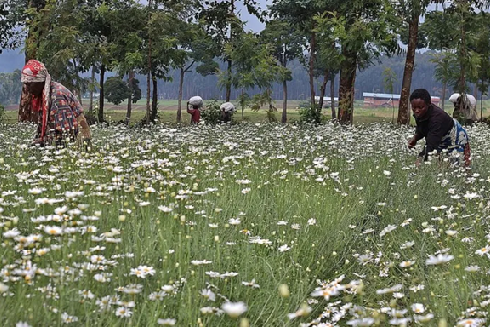
I was chatting with a CSA basket subscriber about her recent trip to the Land of a Thousand Hills
when she showed me photos of fields filled with this white-and-yellow-flowered plant, reputed to have healing properties and whose dried and crushed roots are said to have a flavor reminiscent of licorice.

Hildegard of Bingen, from her native Rhine, had already spoken very highly of this plant,
which she studied and used in her writings on botany and medicine.
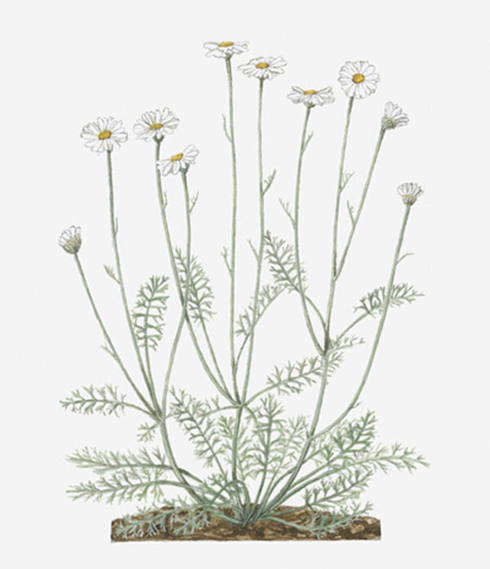
But what really piqued my curiosity is that pyrethrum is also used in one of the most commonly recommended natural pesticides in organic farming,
in a concentrated form called pyrethrins, which we apply on the farm mainly to combat flea beetles—enemy number one of the brassica family. However, the pyrethrum used as an insecticide isn’t African, but Dalmatian—grown in the geographic region along the southeastern coast of the Adriatic Sea—a variety that resembles its African cousin but doesn’t share its healing properties.
In short, everything is connected…
In this week’s baskets:
mixed melon, eggplant, cucumbers, carrots, assorted leafy greens, tomatoes, peppers, and other yet-to-be-identified vegetables.

We look forward to seeing you again.