
A River Runs Through It
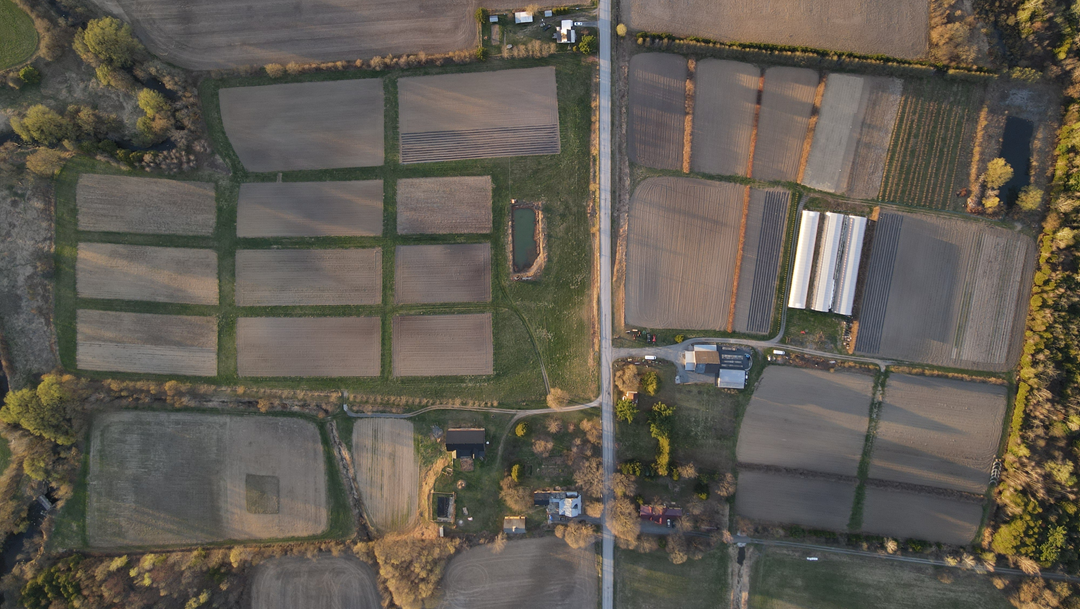
We let winter— and even part of spring—run its course.
The time has now come to send this note to remind those of you who have yet to sign up to do so and to give you a peek at what has been happening on the farm over the last few weeks.
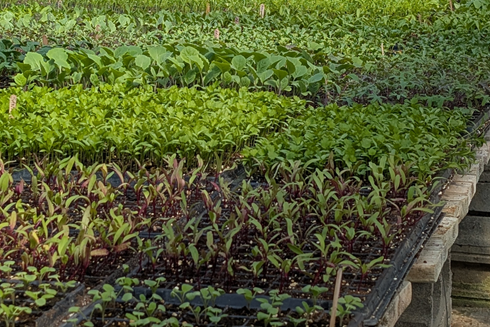
The seedling greenhouse has been up and running since April 1st
and it is already almost full of trays at all kinds of growth stages. The leeks and onions we seeded first have already had a second trim and are starting to be planted out; the early tomatoes have been transplanted and will go into their tunnels within a week, with peppers and eggplants to follow shortly after. Everything else will proceed apace, depending on its germination date and how quickly it grows in the trays.
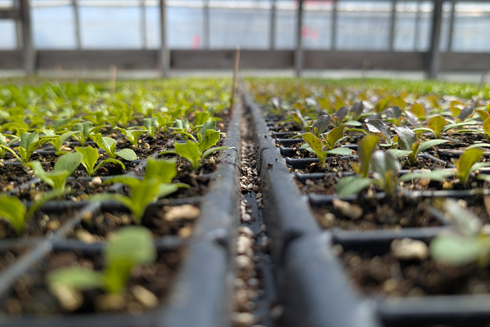
Brassicas (kale, cabbage, broccoli, and so on…) really are nature’s favourites
because they only need a few days to poke their heads out, and within just a few weeks can be set out in the field (in fact, they have already been there for a week). That is quite different from celeriac and parsley, which can take up to an initial three weeks just to germinate, and then even longer before they are ready to transplant before going out to the field.
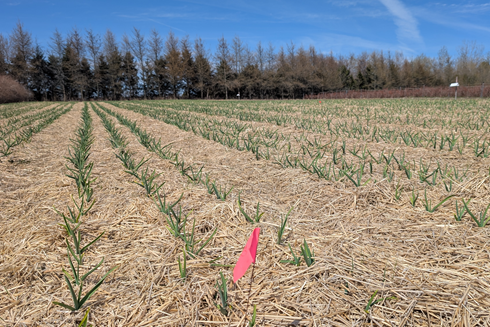
Good news on the garlic front: it really likes
the spot we chose for it last year
and has pushed right through the protective straw we spread last November with no trouble at all. The harvest is looking to be a generous one.
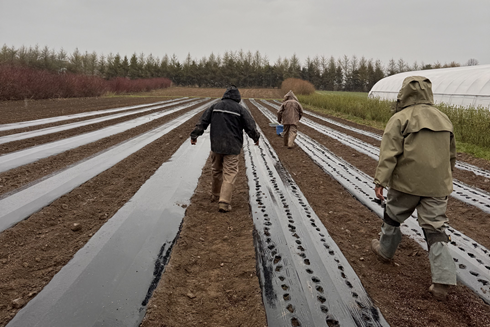
Luckily, between the April rains and the early-May ones,
we still got some properly warm temperatures that let us work our plots. As usual, we make do with spring’s weather curveballs. Nothing new under the sun, Solomon would have said, and we agree…

Registrations are moving along, steady but unhurried,
so we invite you to sign up ASAP so we can plan the summer properly. If you are already signed up, we still have space, so please do not hesitate to nudge family, friends, and tutti quanti to join the harvest party that lasts all season at Arlington Gardens.
CSA deliveries will begin
on June 10-11 in the residential neighbourhoods (i.e., 22 weeks in Montreal West, Ville Mont-Royal, Westmount, and Côte-Saint-Paul), and on July 3-4-5 – for both organic baskets and loyalty cards – at Jean Talon and Atwater markets (19 weeks).

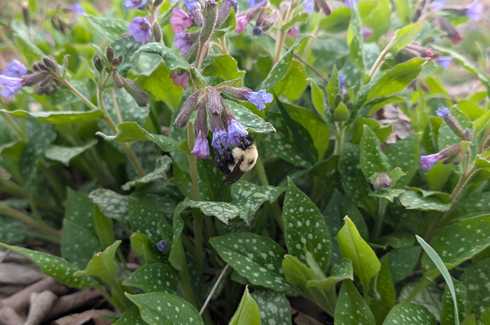
We look forward to meeting up with you soon!
Getting Ready

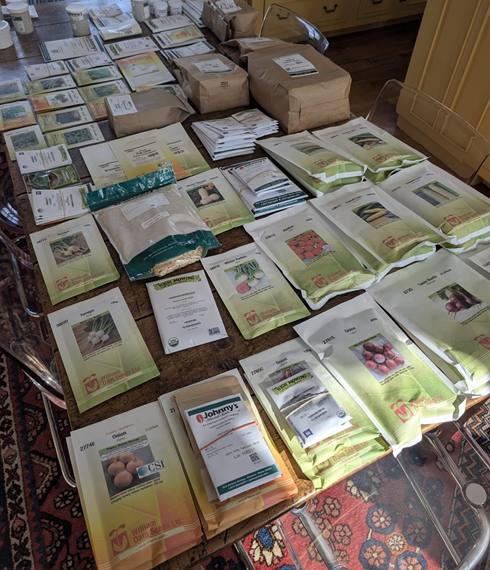
As the last of our three seed orders from our trusted suppliers arrived this past week,
we told ourselves that winter had lasted long enough and that the time had come
to gear up for the launch of our 2026 CSA season.
Not that we have been in full hibernation – far from it. While the fields have been asleep under a thick cover of snow and the warehouse remains colder inside than out, we have been busy closing the fiscal year, tending to the farm’s paperwork with the government, and refreshing the website in preparation for seasonal sign-ups. All of that is now done: the seeds are accounted for, the production plans completed, and our product pages tested more times than we would like to admit.
The King is dead, Long live the King – and here’s to summer 2026.
We’re delighted to officially open registration today for the Jardins d’Arlington organic basket season – our 17th!
Deliveries will begin Wednesday, June 10 and run through Sunday, November 8: 22 weeks for our neighbourhood drop‑off locations, and 19 weeks for our Atwater and Jean‑Talon market pickups (from July 3 to November 8).
Diversity and quality will, as always, be front and center, and we have made an effort to hunt through our catalogues for new varieties and some lesser‑used vegetables.
That said, the kitchen stalwarts will still be there, including a wide selection of herbs. In a few weeks, once there is a little less snow on the ground, we will prune the blueberry bushes and hope for a beautiful warm summer like last year.

To sign up now for your organic baskets or
prepaid market cards, click here.
And if you would like to round out your weekly veggies with bread from Capitaine Levain, follow this link for their ‘au choix’ sourdough organic bread baskets or this one for their ‘surprise’ baskets.
If you have any questions as we kick off the season, feel free to reach us at info@jardindarlington.ca.
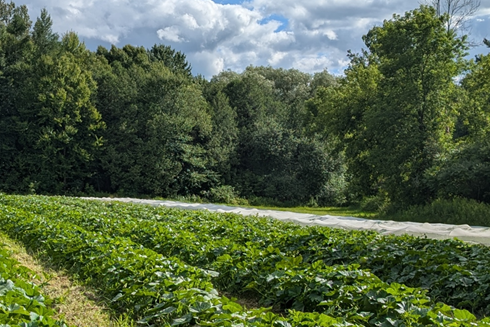
We look forward to seeing you all again this summer!
Messy Mix
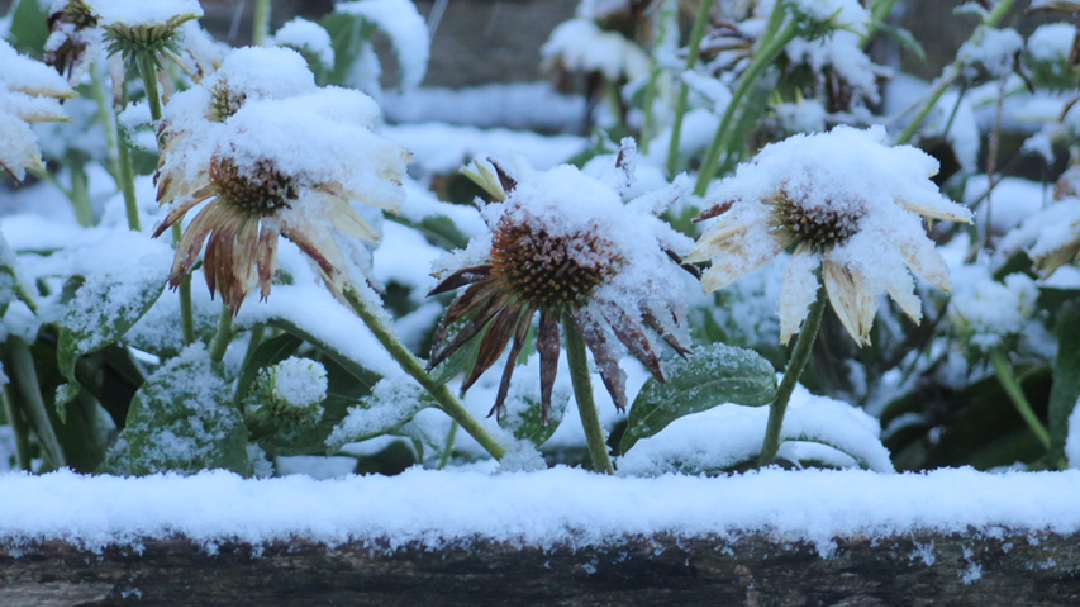
It has been several years since we have ended the season with such dreadful weather.
Freezing rain, snow, sleet, power outages…we have seen it all. And on top of that, we have had to rush to take down our market stalls to make room for the Christmas tree vendors. In short, the last week of deliveries will keep us quite busy.

Early Wednesday morning,
we will also be saying goodbye to the last members of our field crew, who are eager to return to their families and to gentler skies. And once the baskets are delivered, we too will head into our winter rest – or hibernation 😊…

In this final basket,
you will find a colourful mix of all the vegetables we managed to harvest from the fields: winter squash, carrots, leeks or onions, herbs, kale or Swiss chard, potatoes or beets, assorted cabbages, garlic, etc…

We thank you for your support throughout the summer,
for lending a kind ear to the ups and downs of organic farming, and for adapting to the challenges of the season.
Have a wonderful winter, we will be back in touch for the 2026 season next February!
Book Appeal

As the season is drawing to a close, I have finally allowed myself a serious read –
the first of many that will surely fill the long winter months that I am already looking forward to. The stack of books beside my chair is tall, but I decided to start with an essay that still touches on agriculture, even if its implications verge on the existential. Written in 2023 by Olivier Christin and Guillaume Alonge, the book bears the rather evocative title Adam and Eve: Paradise, Meat, and Vegetables – which, I must say, irresistibly calls to mind that deliciously baroque film The Cook, the Thief, His Wife and Her Lover. But I digress, and the topic here is of a much graver kind: it lay at the heart of the great theological debates that divided Protestants and Catholics in the decades following the Reformation.

The question, then, is this: Were Adam and Eve vegetarians – perhaps even vegans?
At first glance, it feels like a very modern question, given the place such concerns occupy amongst today’s psychological and moral preoccupations. Yet, in its time, it began as a strictly theological dispute – between Protestant reformers and Catholics – before being taken up by scientists, biologists, and physicians, who transformed it into an anatomical and therefore medical debate. While it may all sound amusing from a distance, the Christin/Alonge essay is genuinely fascinating – and, as you might imagine, everyone is left to draw his/her own conclusion. Indeed, we’ll never know for certain whether Adam and Eve were vegetarians in the Garden of Eden, before the Fall; and whether they became omnivores only after stepping off Noah’s Ark, post-Deluge. 😕

In your baskets this week, a wholly vegetarian selection, as always: winter squash, beets, onions, potatoes, leeks, leafy greens, herbs, and a touch of fennel – small, but full of flavor.

We look forward to seeing you all again.
Curtain Call
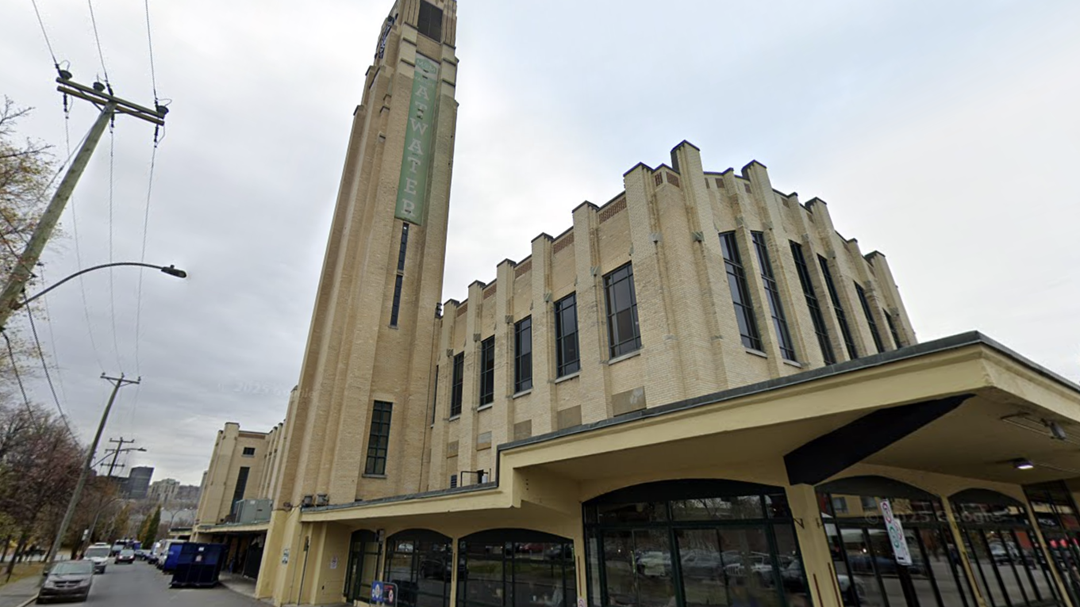
The curtain has fallen on Montréal’s public markets – and, with it, the last traces
of summer in their once-bustling aisles.
Jean Talon and Atwater are not really closed, but drab walls have been put up in their central sections in anticipation of winter. And so it is that those who love to wander from stall to stall, in search of that elusive vegetable, have drifted toward other skies…
For us market farmers – devoted to diversity in our fields as we are, the markets remind us that every taste truly does exist in nature. For every vegetable, no matter how unusual,
there is someone who loves it. That is the joy of growing the odd, the misunderstood.

I would like to take this opportunity to
salute our market farm members, both
basket and loyalty card subscribers,
who will be leaving us in two weekends*.
May your winter be peaceful and snow-filled. In the meantime, there are still a few vegetables left to harvest from the fields to brighten up the last baskets and our end-of season market stands.
In your baskets this week,
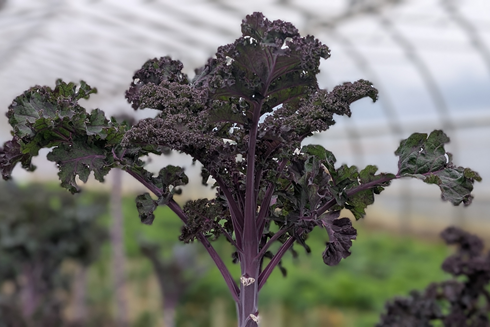
you should find a variety of winter squashes, green cabbage, carrots, potatoes, leeks, assorted greens, herbs, and garlic.
We look forward to seeing you all again.
* NB: our last market day will be Sunday, November 9
The End is Nigh
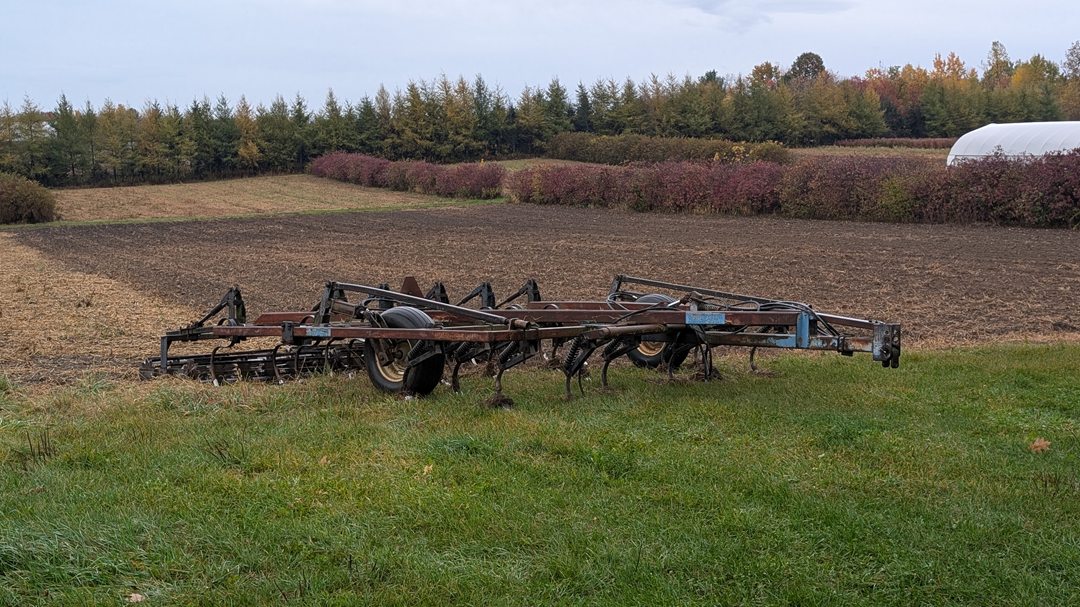
If, for some of you, the week is looking a bit gloomy with the predicted rain and grey skies, for this market gardener, every shower or downpour will be more than welcome.
It will indeed be nice to count on the rain to water the few vegetables still lingering in our fields—but that is not really the point. The groundwater is low, our ponds are dry. We will need several weeks like this to begin to replenish what the season’s long dry spell used up. The window is narrow: November is our last real chance before the cold hardens the soil and closes it off to moisture. After that, winter’s grip will take hold, and the ground will freeze, unyielding.

So, our other great hope? Snow.
A generous winter snowfall, steady and layered, which will act as the savings account of our fields, to be drawn down in the Spring. All in good time – I will start by enjoying the grey skies for now…
In your baskets:
assorted winter squash, napa cabbage, potatoes or beets, rutabaga
or celeriac, assorted leafy greens, fresh herbs, and more…

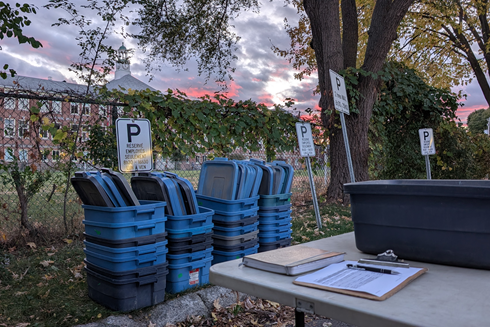
We look forward to seeing you again.
Thanksgiving
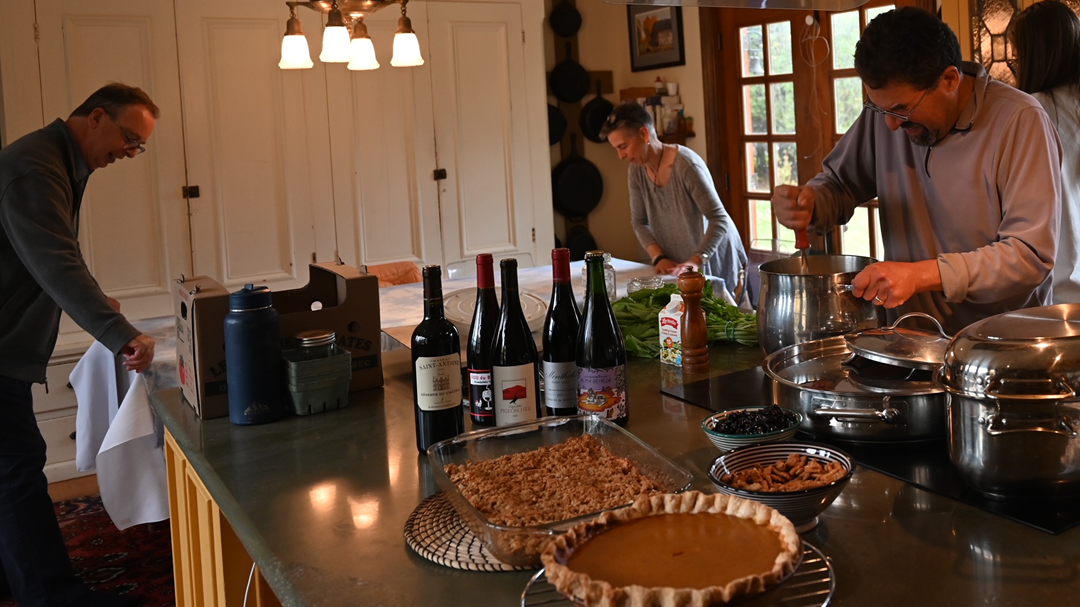
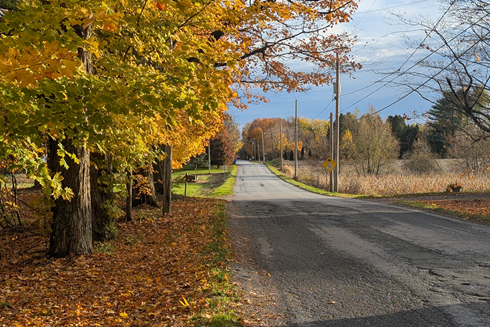
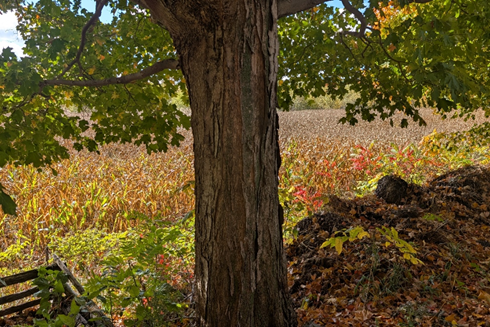
An autumn veil has gently settled over the farm – rich in ochres and earthy browns.
Verlaine said it best: “…the long sobs of autumn’s violins…” (if only we could all write like Verlaine! 😊) Every year, there’s a moment when you just know: summer has officially slipped away. For me, that moment came today – on this quiet Thanksgiving Monday which feels like the perfect time to mark the harvest, to reflect, and to give thanks for all that the season has brought us.
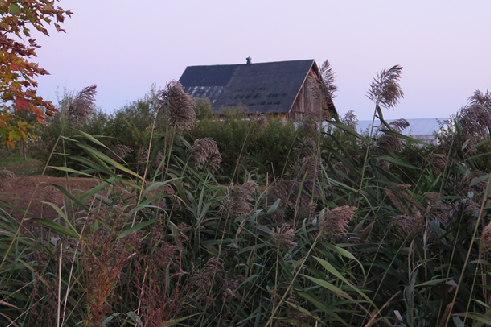
With just a few weeks left before the season ends, the fields are ready for a well-earned rest after months of hard work.
And we’re doing our part to help them wind down—harrowing here, sowing cover crops there, making sure they’re ready for winter’s arrival. There’s a general sense of relief as well because we have managed to plant all the garlic for next season. We took advantage of the mild weather recently to do it under optimal conditions—that is, in loose, not-too-dry soil. Over the next few weeks, it will quietly set roots and store up energy to face the winter frosts ahead… before making its cheery appearance come spring.
In your baskets, note the return
of summer in muted tones –
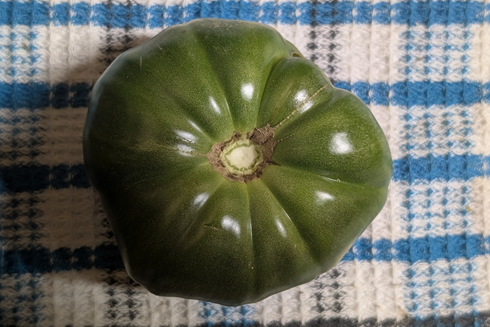
in the guise of the green tomatoes we harvested today that will no longer ripen. Prepare them in a variety of ways: whether as classic Green Fried Tomatoes, in assorted chutneys, or even pickled. There will also be winter squash, onions, leeks, assorted leafy greens, potatoes and/or other root vegetables.
We look forward to seeing you all again.
October & Voltaire

As our very own Canadian Thanksgiving approaches, I thought a little detour
via Ferney would not hurt –
Ferney, where Voltaire spent the last 20 years of his life cultivating a strong interest in agriculture and craftsmanship. Philosopher, satirist, businessman – yes. But farmer? Well yes, that too.
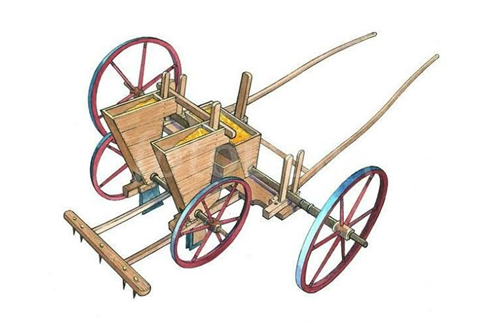
The man dabbled in everything, and from his French estate near the Swiss border, he took a keen interest in various agricultural methods,
experimenting with new ones to boost productivity, proudly working his own fields, and even acquiring what was then the height of agrarian technology – a seed-drill plough, the nec plus ultra of his time.
Had he lived in our era, perhaps he would have championed the Green Revolution, deleterious side effects and all.
But we cannot fault this apostle of reason and progress — he did not have today’s knowledge of soil health or the long-term impact of the plough. Perhaps he would have abandoned the use of the plough altogether had he known about its harmful effects.

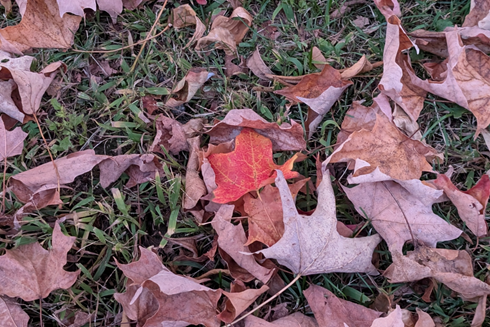
Environment Canada is forecasting a cool weekend — the perfect occasion for root vegetables and hearty soups. In this week’s basket:
a variety of winter squash, rutabagas, carrots or beets, potatoes, celeriac, Napa or green cabbage, garlic, fresh herbs, and a leafy green.
We look forward to seeing you all again!
Opera? Vegetables?

What is the connection between Mozart’s Don Giovanni and market farming?
None really, except that it is one of my favourite operas and it is currently playing at the Opéra de Montréal. Were it not for the still-too-busy schedule of these market gardeners, you would have found us in that cavernous lair that is Wilfrid Pelletier Hall – a musical space we love to hate for its highly questionable acoustics.
The music is sublime, the arias diabolical, the libretto captivating, not to mention the themes explored…
In short, Don Giovanni would be rotting in a Canadian federal prison today, considering his behaviour towards women, Leporellian catalogue in hand…
O tempora, O mores!
* Photo by Vivien Gaumond / Opéra de Montréal


But the most moving moment of the opera comes when the seducer faces the Commendatore – whom he has just killed in an earlier scene – who invites him to repent.
Of course, the seducer refuses, and consequently, earns himself a warm seat in Hell or perhaps Purgatory – Da Ponte says nothing on the matter. I do not have time to dwell on this, but Mozart could not possibly have let Don Giovanni get off so easily. As with every Hollywood ending, Good must triumph over Evil…
* Photo by Vivien Gaumond / Opéra de Montréal
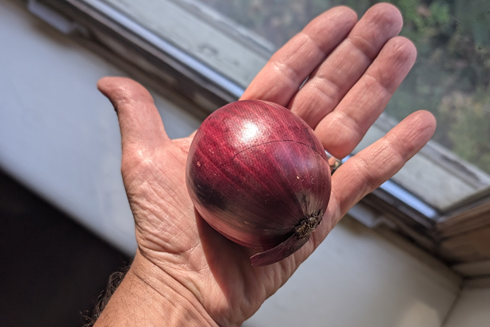
In this week’s baskets:
peppers, cabbage or napa cabbage, daikon, beets or carrots, winter squash, red onion, leek, fresh herbs, and other yet-to-be-identified vegetables.
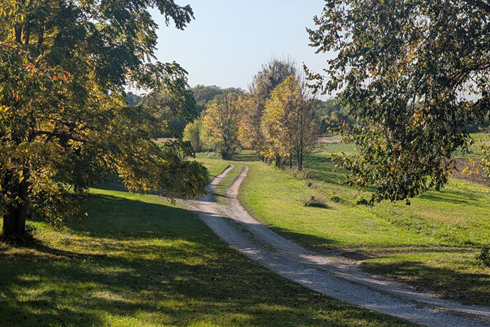
We look forward to seeing you all again!
First Fall Frost
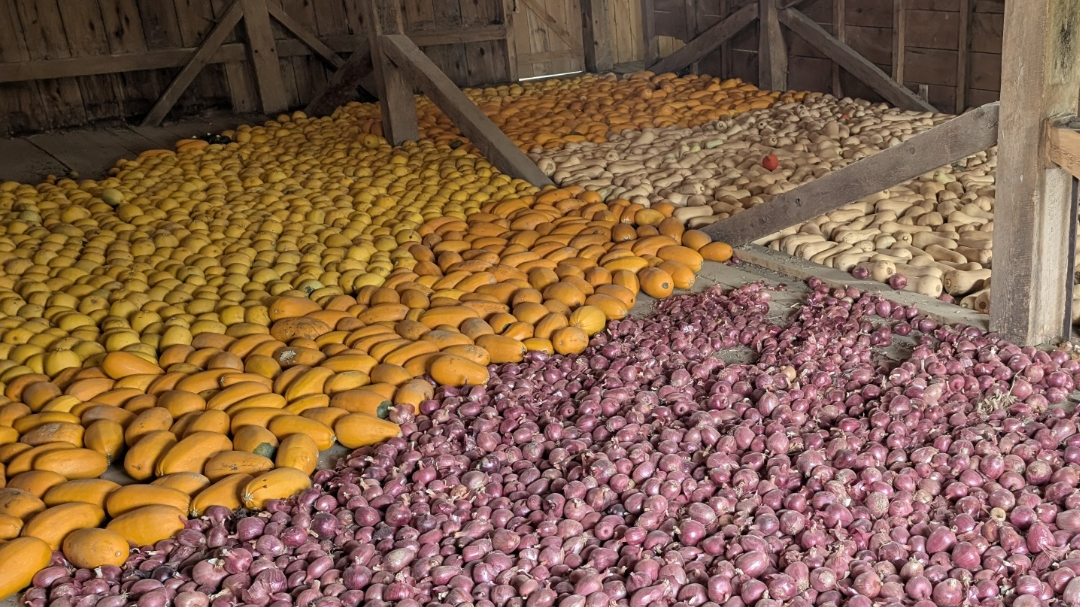
Two nights of frost at the farm this past weekend have solved
many headaches for this market gardener.
First, on the vegetable front, where the solanaceae (like tomatoes, peppers, etc.) and other fragile-skinned vegetables have given up the ghost without a second thought. Then, amongst the annual weeds, who have decided they had caused enough trouble this summer and have opted to cease and desist.
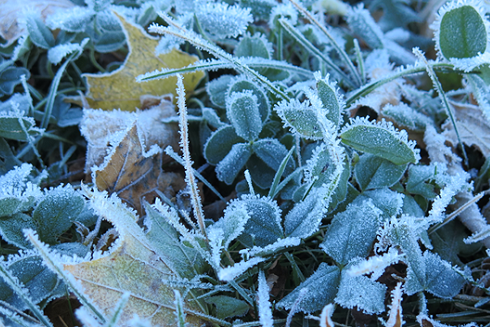
While the first consequence is sad but expected,
I am always glad to see the first frosts and their effects on weeds – nature’s way of separating the wheat from the chaff, so to speak. Only the hardiest or most resilient plants remain in the fields – those whom a little -1°C leaves non-plussed. In short, it is Darwinism at its most elemental…
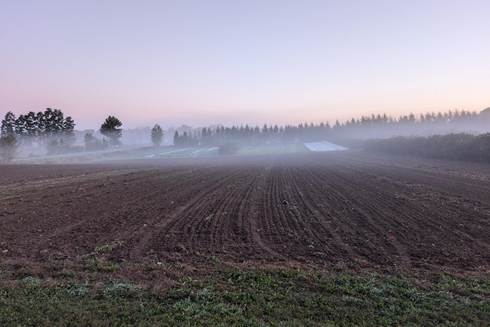
Frosts aside, field cleanup and the sowing of fall green manures continue apace
– some plots with oats, others with rye – just to make sure that almost nothing will be left bare when the cold north wind comes!
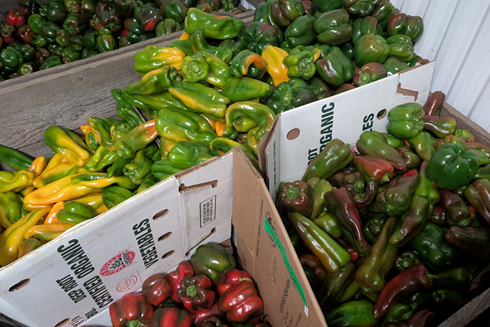
In your baskets this week:
delicata squash, peppers, potatoes, celeriac, a variety of leafy greens, and some yet-to-be-chosen winter root vegetables.
We look forward to seeing you again!
Mid-Season
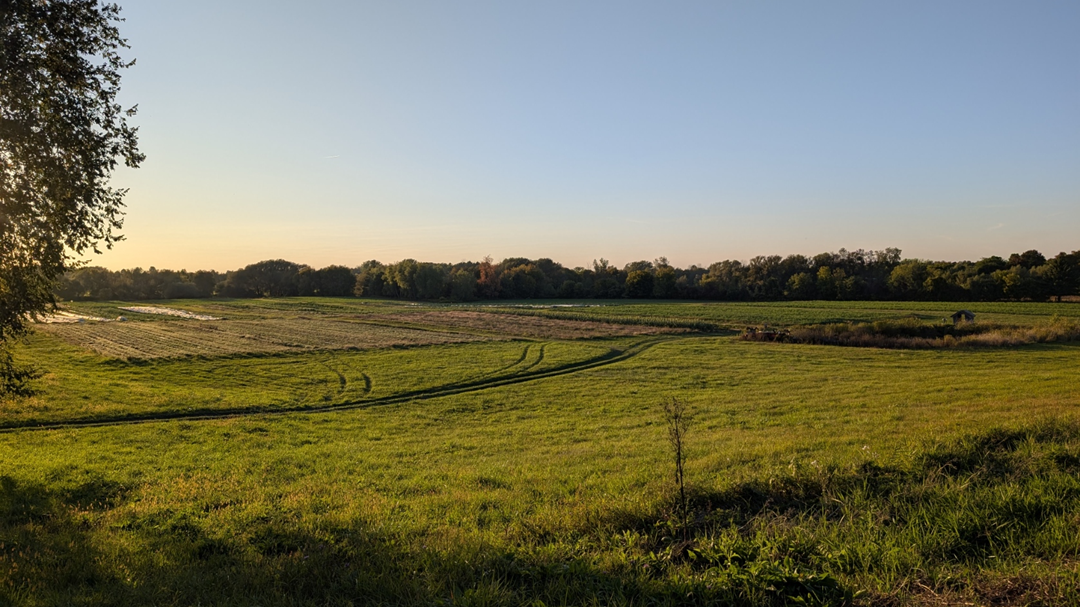
Our CSA and market season is past its halfway point,
so I thought now would be a good time to share a little glimpse of what is still to come — and what you might expect to find tucked into your vegetable baskets over the coming weeks 😊…
Excluding this week, there will be 7 market weekends and 8 Wednesday-Thursday vegetable deliveries remaining between now and November 12-13. For those of you who took some time off this summer and have double baskets to make up, the time has come to start doing so. It is generally best not to wait until the end of the season: trying to plough through three double baskets in the last three weeks can be a daunting task…
Our Italian tomato deliveries are nearly done,
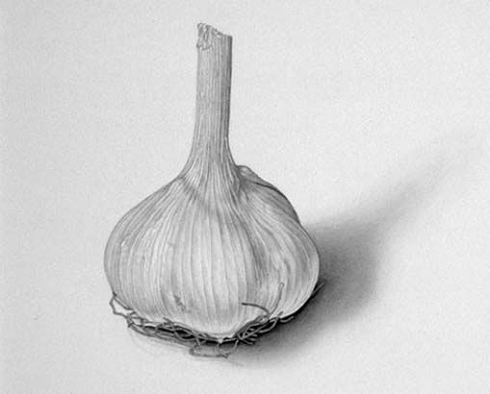
and we are getting ready to shift gears to garlic — likely to be delivered during the week of September 29. A confirmation email will follow as we near that date.
In the fields, we are switching to autumn mode.
Goodbye tomatoes and eggplants, hello root vegetables and winter squash. Do not be surprised if you see a repeat of spaghetti squash over the next couple of weeks — the main reason for the repetition being that they do not keep as well or as long as other varieties (acorn, butternut, et al.). Very soon, you will also start seeing the likes of celeriac, rutabaga, and daikon radish, regularly accompanied by potatoes, leeks, and carrots. The sun may still be shining brightly in the sky, but out in the fields, it is full-on Fall.
In this week’s basket:
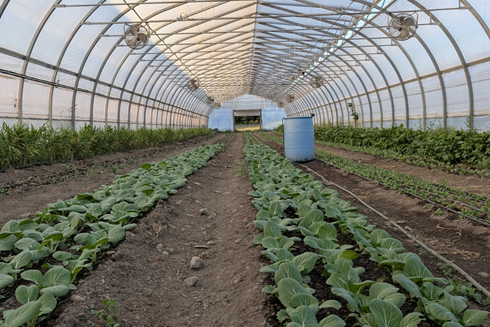
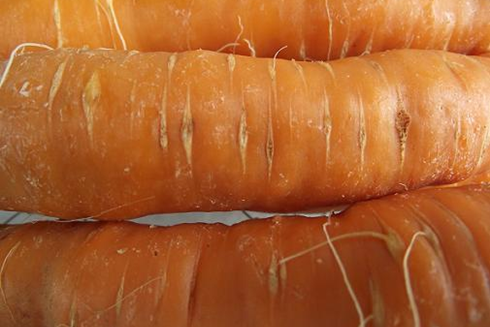
winter squash, radish or turnips, carrots, peppers, leeks, leafy greens, fresh herbs, onions and more…
We look forward to seeing you soon.
Downhill
The season is gently tilting downhill now – and, I must say, I welcome it.
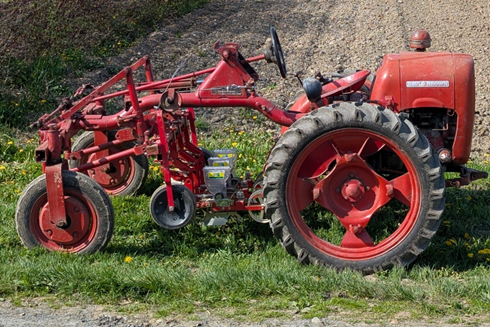
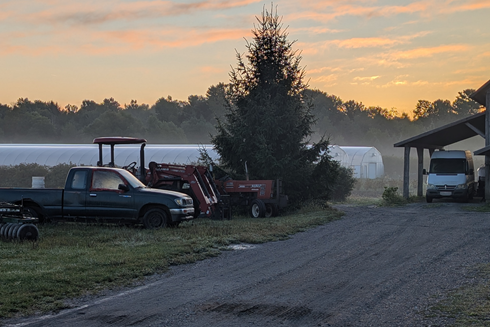
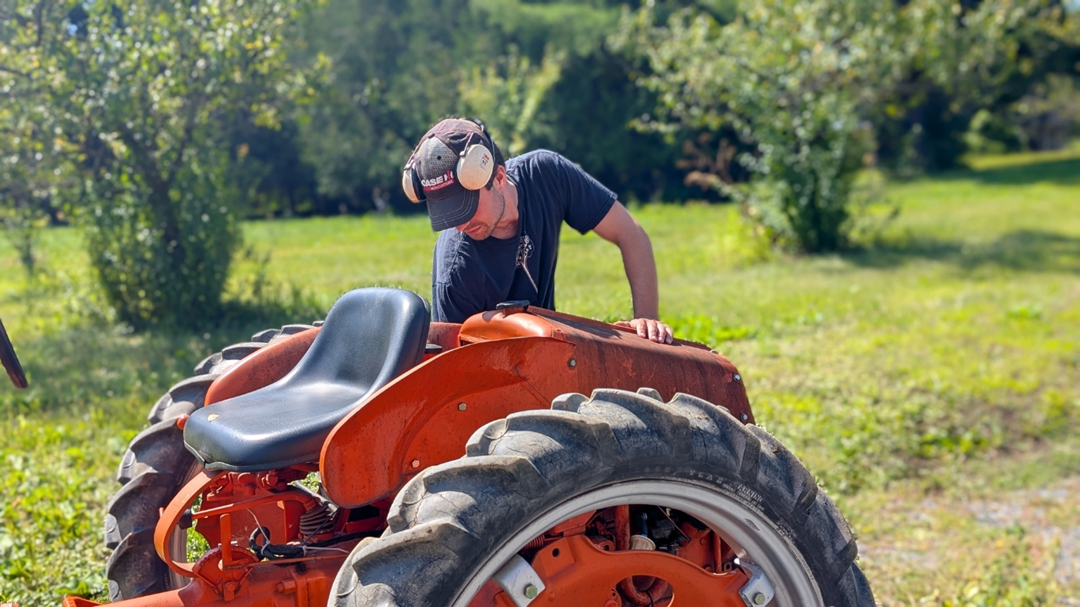
I know this because this past weekend, we planted the last trays of summer vegetables – leafy greens, and more leafy greens. I am exaggerating a bit, because I am still hopeful that in a few days, we will get in one final sowing of radishes, promised for the baskets. But for that, we will be calling on the tractor and its front-mounted seeder.
As September begins, our focus now turns to something essential for the health of our soils:
tending to fields that have been patiently waiting their turn. They have been cultivated once already this season and now require a bit of care: cleanup, harrowing, a cover crop of green manure, and most importantly, rest. Without diving too deep into the technicalities, I can say this: the majority of our fields are already prepared for next year’s crops.
What remains are those fields
cultivated earlier this year,
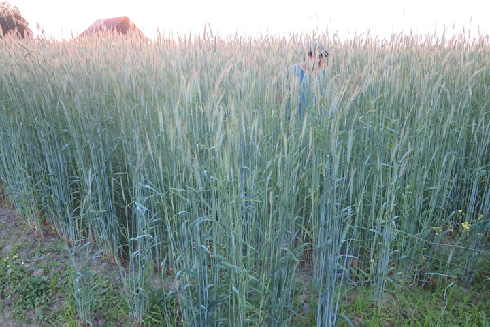
which would benefit from a respectable dose of nitrogen fertilization before the start of autumn. Time is short. We have maybe two weeks to get those oats or rye into the ground so they can germinate quickly and establish a strong cover before the cold begins its slow, sharp descent, all while the harvest ballet continues in full swing.
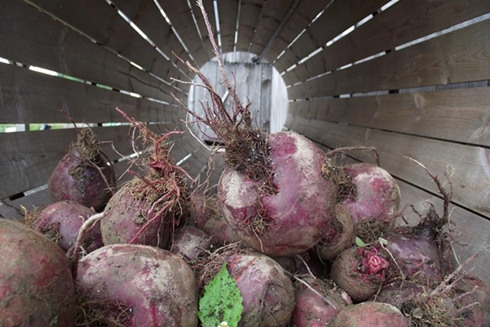
In your baskets this week:
Varied winter squash, potatoes, peppers, tomatoes, beets, assorted lettuces, kale or Swiss chard, assorted herbs, and more.
See you soon.
A Glorious Week
The week is shaping up to be a glorious one, under the auspices of the winter squash.
We are quite fond of this cucurbit at the Arlington Gardens. First of all, because it marks the start of a kind of countdown, a hint of the autumn to come – although we now know better than to trust the epiphenomenon that was last Saturday: a full-on autumnal day, chilly and rainy to boot. We also love it because it adds colour and new flavours to the baskets. From the spaghetti squash you’ll find in your baskets this week to the butternut squash you’ll get towards the end of the season, you’ll discover a whole variety of squashes, each with its own unique flavour and changing brix levels.
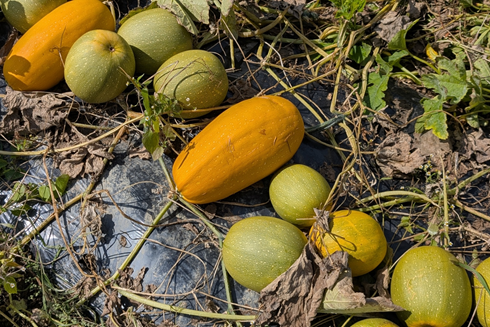
In the meantime, we must first harvest them,
let them ripen in the fields and in our barns and then store them in large vegetable bins in our warehouse. As we will be offering squash nearly every week, know that – save one or two exceptions – they will keep very well in a dry spot in your home.
In the baskets this week, summer continues with a small incursion into autumn:
spaghetti squash, tomatoes, eggplant,
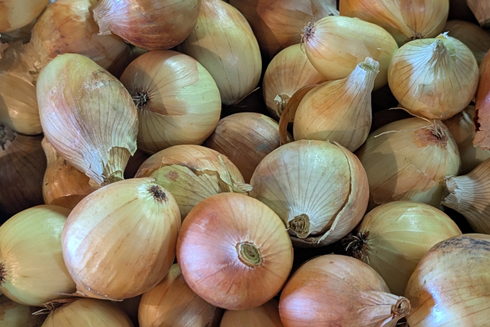
peppers, garlic, summer leeks, onions, leafy greens, herbs, and more.
We look forward to seeing you all again.
Rwanda, Dalmatia, Hildegard & Pyrethrum…

You may wonder why Rwanda, Dalmatia, Hildegard of Bingen, and pyrethrum all appear in the same paragraph – but bear with me.
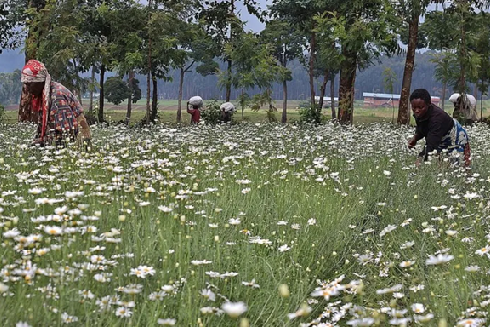
I was chatting with a CSA basket subscriber about her recent trip to the Land of a Thousand Hills
when she showed me photos of fields filled with this white-and-yellow-flowered plant, reputed to have healing properties and whose dried and crushed roots are said to have a flavor reminiscent of licorice.

Hildegard of Bingen, from her native Rhine, had already spoken very highly of this plant,
which she studied and used in her writings on botany and medicine.
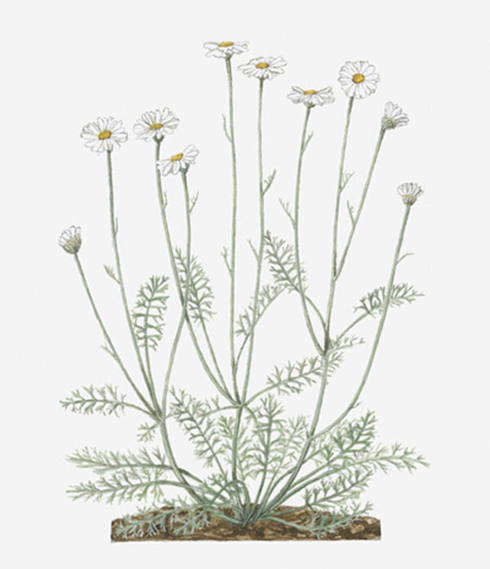
But what really piqued my curiosity is that pyrethrum is also used in one of the most commonly recommended natural pesticides in organic farming,
in a concentrated form called pyrethrins, which we apply on the farm mainly to combat flea beetles—enemy number one of the brassica family. However, the pyrethrum used as an insecticide isn’t African, but Dalmatian—grown in the geographic region along the southeastern coast of the Adriatic Sea—a variety that resembles its African cousin but doesn’t share its healing properties.
In short, everything is connected…
In this week’s baskets:
mixed melon, eggplant, cucumbers, carrots, assorted leafy greens, tomatoes, peppers, and other yet-to-be-identified vegetables.
We look forward to seeing you again.
Disaster, Narrowly Averted
I will be brief with news from the farm
in order to leave room for our upcoming offers of canning tomatoes and conservation garlic, deliveries of which will be starting shortly.
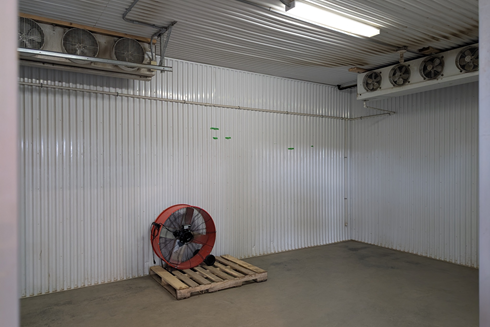
First, the compressor of our main cold room gave out at exactly 5:15 PM last Friday.
We went into full emergency mode, starting with a frantic call to a neighboring farmer friend whose generosity knows no bounds, followed by the transportation of all our vegetables into his very large cold room late into the evening, and another (not so frantic) call today to my usual refrigeration mechanic, who has promised a new compressor by tomorrow evening. Phew.
Other farm news:
it rained for a good two hours on Sunday – enough to moisten the fields, but not enough to refill the ponds. Still, I will not complain, as more rain is forecast for this week. 🤞
Now, on to our summer offers of Italian tomatoes for your canning needs and
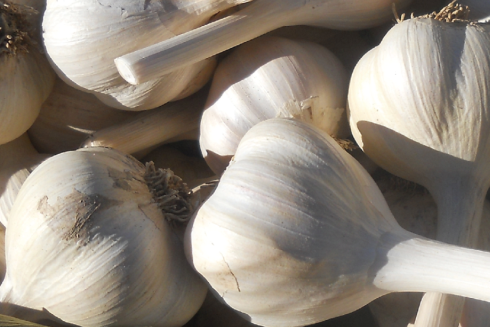
storage garlic for your winter use.
Harvesting of our paste tomatoes will begin in the next few days, and if you enjoy making your own tomato sauce for the winter, this offer might interest you. We will be delivering 20-pound half-bushels of paste tomatoes for $35 starting next week, and we will also be taking orders for storage garlic – for delivery in September – for $30 per kilo.
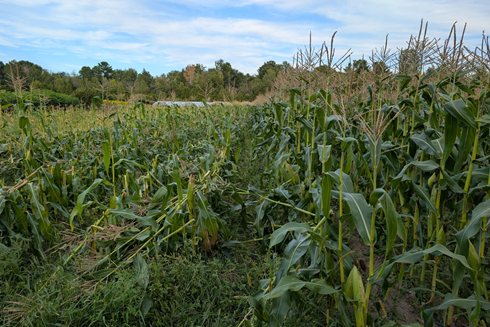
Corn will be in your baskets again,
as will watermelons or cantaloupes.
You will also find eggplant, tomatoes, cucumbers, summer squash, and – as leafy greens – lettuce and chicory.
We look forward to seeing you all again.
Defend & Protect
It’s enough to develop a full-blown neurosis!
A tour of the fields this morning reminded me just how much diversified vegetable farming is a matter of defensive positioning and protection mechanisms.
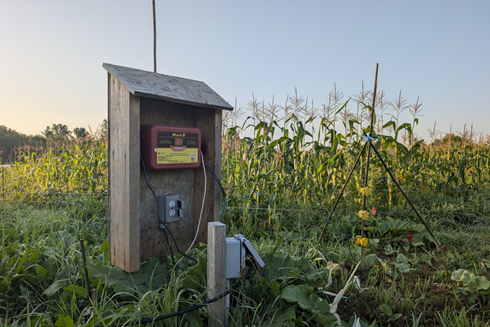
If you have blueberries – so delicious and sweet – in your baskets,
it is in large part thanks to the protective netting that shields them from birds’ rapacious appetite for berries. If the kale, Swiss chard, and other brassicas are not too full of holes, it is because we let them grow under insect netting of a particular mesh size, in order to keep them safe from voracious flea beetles. The same goes for zucchinis, cucumbers, and the whole cucurbit family – including winter squash, melons, and watermelons – for which another type of more opaque insect netting is installed, to prevent cucumber beetles from having a field day…And last but not least, there is the corn, for which we go all out: with electric fences hooked directly to the farm’s power boxes, delivering a juicy 110 volts to overly curious raccoons…This farmer, in any case, is really looking forward to fall, because it is the only time of year when, as insects and birds become scarcer, it is no longer necessary to cover every crop with netting.
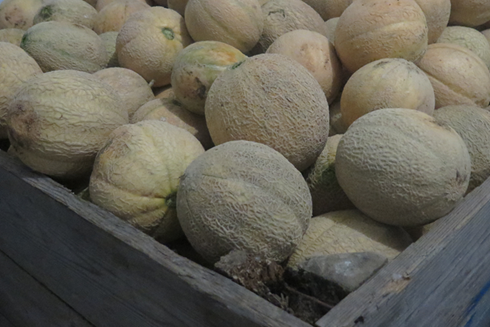
In this week’s basket:
watermelon or cantaloupe, carrots, summer squash, tomatoes, eggplant, lettuce, fresh herbs, and other yet-to-be-identified vegetables.
We were planning to include corn this week, but the next variety isn’t quite ready to harvest. However, we will be offering you our famous jalapeños, the surprise of the summer (🙄), and for which I share the following recipe, fittingly titled Jalapeño Poppers:
Cut as many peppers as you wish in half (without the seeds), fill each one with a creamy mix of ricotta and/or cream cheese, add cheddar or another flavorful cheese, finely chopped chives or onions, sprinkle with breadcrumbs for crunch, and bake for about 20 minutes at 400°F.
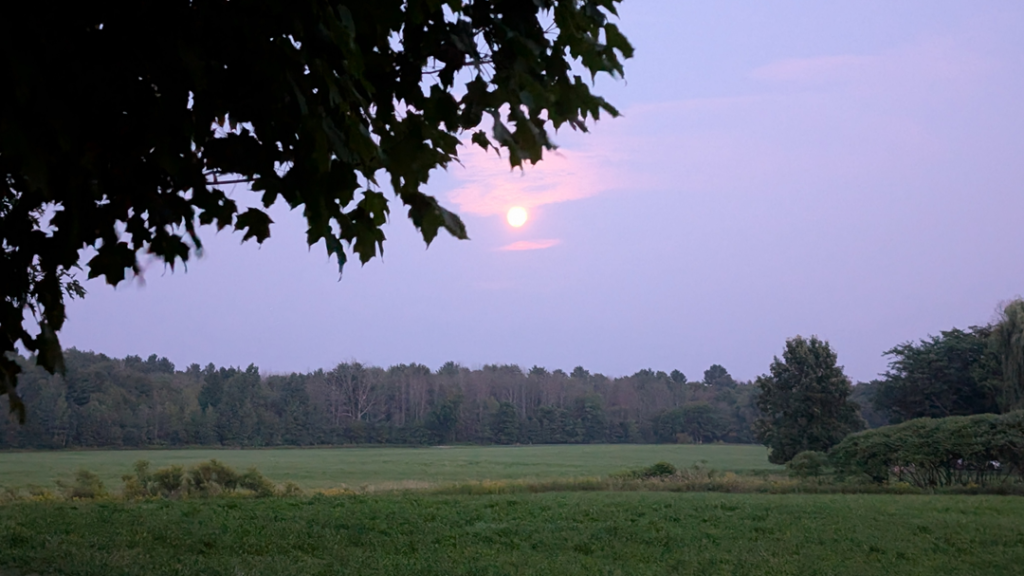
We look forward to seeing you again!
A Scarce Resource
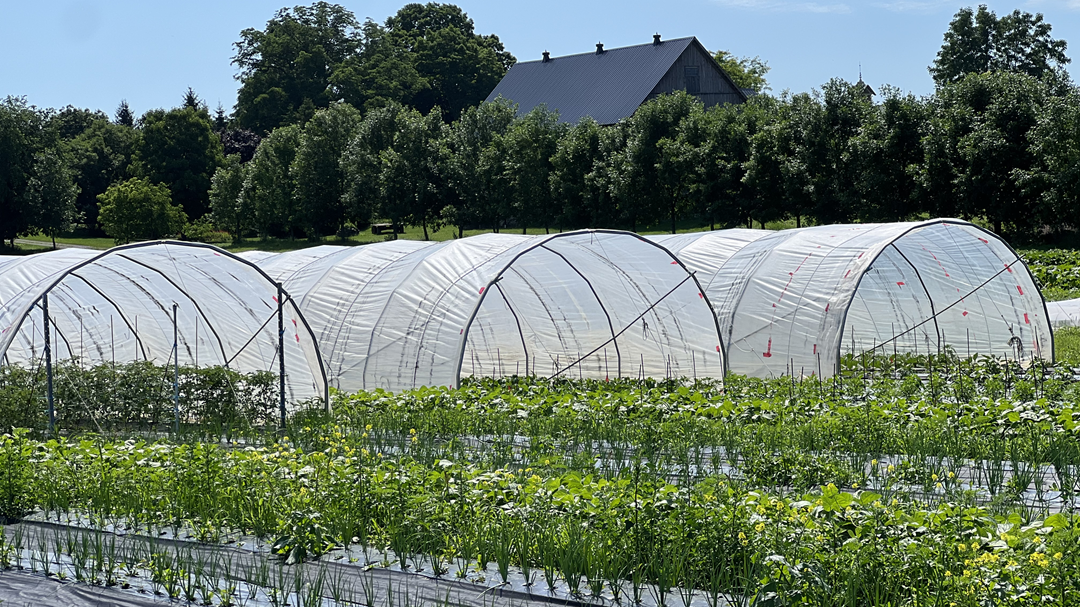
I had been thinking of writing a newsletter about the differences between unheated greenhouses and caterpillar tunnels, but that idea quickly fell by the wayside after my field inspection this morning.
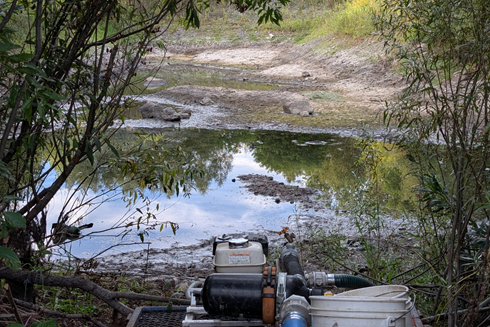
The drought of the past few weeks has finally taken its toll on our irrigation ponds, and as I write this, we are in the process of installing new pipes to feed those water sources – and by extension, our thirsty vegetables.
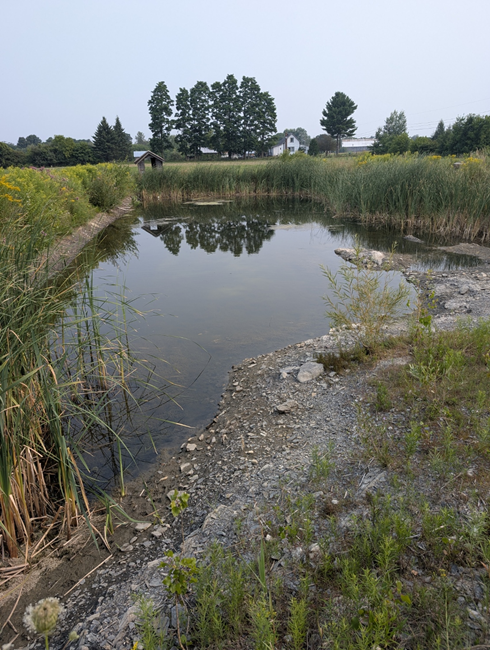
Because a picture is worth
a thousand words,
the ones taken of our ponds this morning speak for themselves. One pond has just two or three days of water left, and the other a week’s worth, at most.
Under other circumstances, all of this would be very stressful for any market gardener –
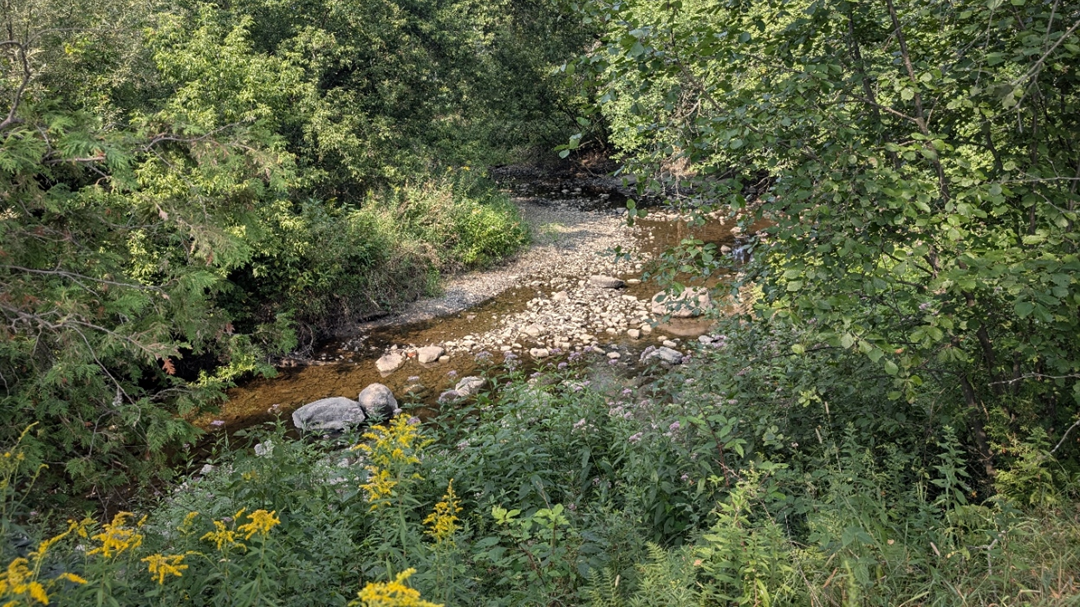
but not here at Arlington Gardens, fortunate as we are to be blessed with a lovely little river which meanders through our fields. It bears the highly original name of “North Branch of the Pike River” – a fish that was no doubt abundant in times past but that is nowhere to be found today…
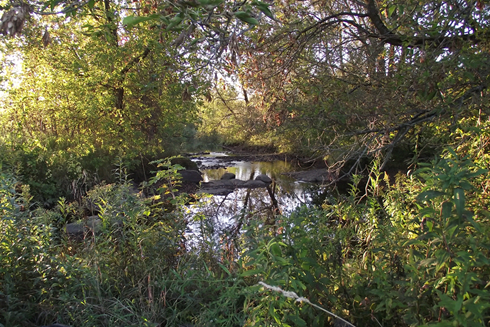
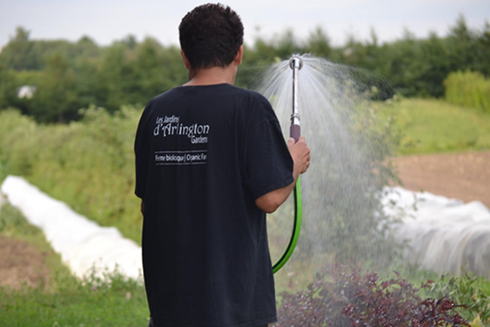
The situation triggered quite
the scramble on the farm,
as we searched through the entrails of our barns to find hoses capable of carrying water from the river to refill one of the ponds, and to reconfigure our irrigation system to support our drip irrigation tubing. In short, not exactly the start to the week I had envisioned – but every week brings its share of surprises…
In your basket this week:
eggplant, cabbage, lettuce, cucumbers, summer squash, blueberries, corn, tomatoes, and fresh herbs. I usually start the pepper season with the so-called green varieties, but not this year. My usual seed supplier for the Cubanelle variety—a real treat—accidentally sent us a packet of seeds that turned out to be the cute but quite spicy Jalapeño. We are talking 300 pepper plants (!!!) now happily growing in our fields. I will still bring some, of course, but you will have to wait a little longer for the coloured peppers (red and yellow) which will ripen by the end of August.

See you very soon!
Of Art & Summer Vegetables
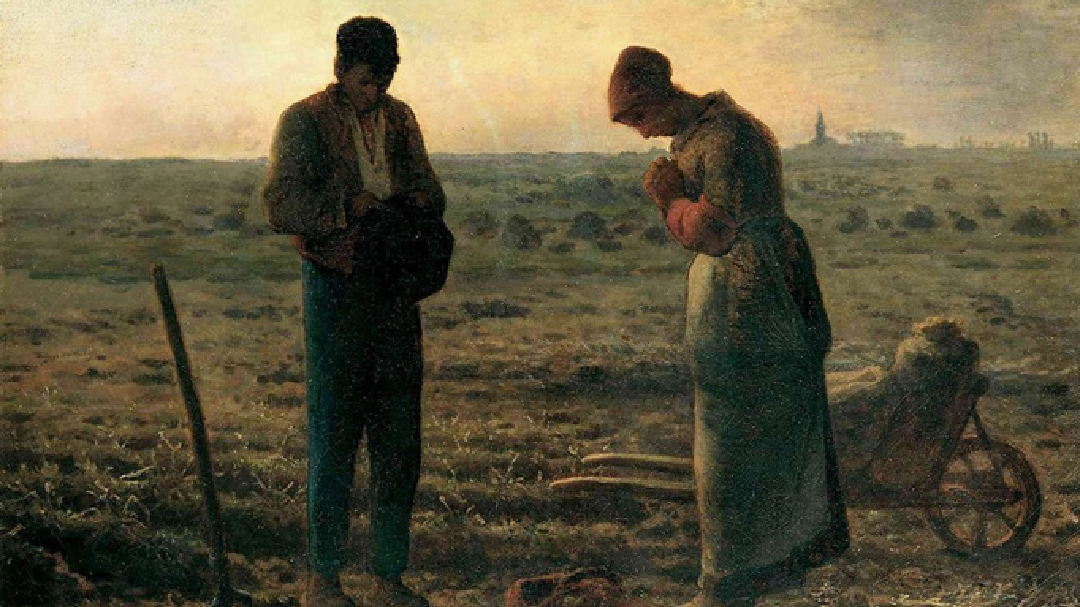
I read on the Internet that the famous painting by J.F. Millet, The Angelus, usually housed
at the Musée d’Orsay, will be exhibited for a few months at the National Gallery in London,
all part of a warming of Anglo-French relations, like in the good old days of European alliances. I will not wax lyrical about my admiration for this 19th-century painter, who began his artistic career with mythological flourishes and nude figures before discovering his true vocation mid-century, as a quasi-realist painter with a particular focus on peasant life and its hardships.
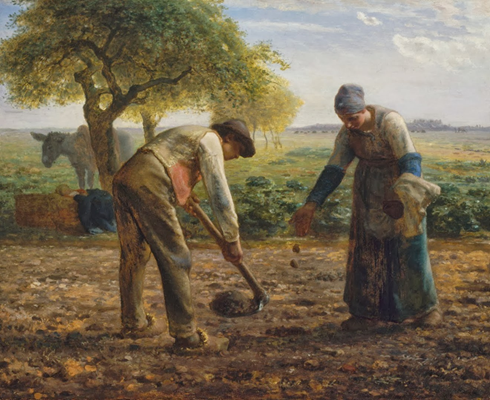
While The Angelus marks a delicately mystical pause in the couple’s long day of toil,
The Gleaners, The Potato Planters, or The Sower are just as many moments of peasant life, captured on the spot, that attest to the political reach of the artist’s work. There would be so much to say about Millet and his painting, but these missives are not really meant for that…
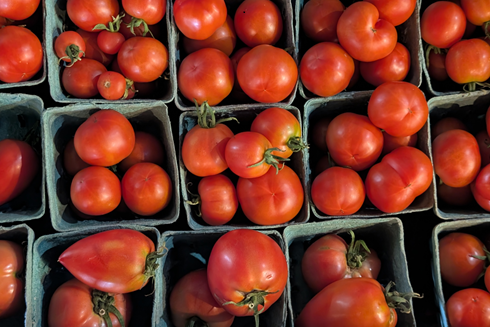
Meawhile, in your basket this week, a true taste of summer:
cucumbers, summer squash, the first carrots, assorted kales, blueberries, fresh herbs, the first tomatoes, assorted herbs, and other yet-to-be-identified vegetables.
We look forward to seeing you all again.
Catch-Up
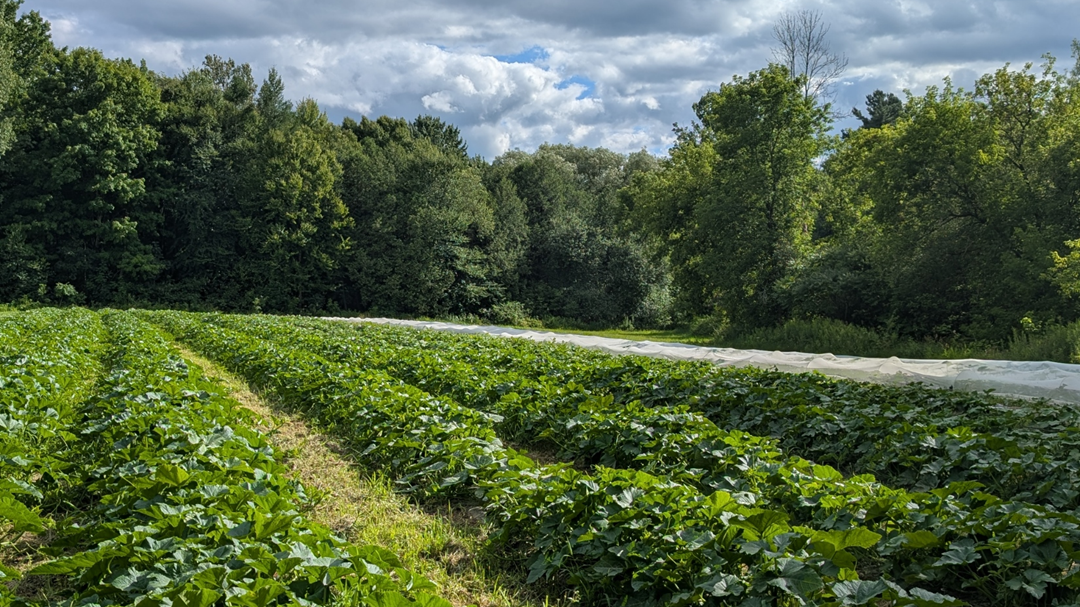
Last week was a blessing for the farm as it allowed us to play catch-up on several fronts.
We began by planting all those trays that had been patiently waiting their turn — lettuces, beets, cabbages, turnips, arugula, and more. Next came weed management, which involved mowing all the spaces between rows and, where necessary, weeding within the rows of various vegetables that simply cannot compete with that infamous adversary.
Under varia,
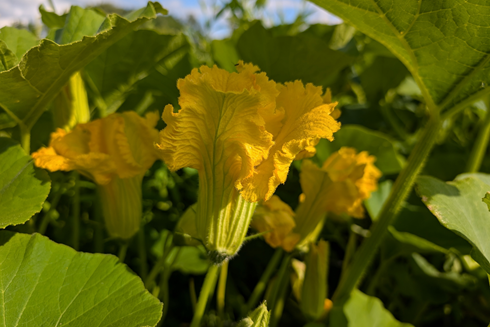
I could highlight the installation of electric fences around the corn plot and also around the leafy greens, as well as the management of the insect netting that had to be removed because the plants underneath were flowering and needed to be pollinated — particularly in our winter squash patch.
Before we knew it,
Thursday morning had arrived
and turning on a dime we switched gears into market mode and began harvesting for the weekend.
There are still new trays to plant and more plots to weed, but the most urgent tasks have been taken care of — and that is what counts.
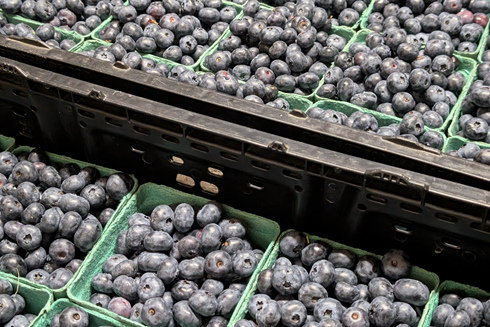
In this week’s basket, a star item: the blueberry.
The challenge is never-ending because appetites are insatiable and without protection — that is, bird netting — there would be no blueberries at all in your baskets.
We’ve been lucky with good rainfall (neither too much nor too little) because the blueberries are nice and plump this year, unlike the strawberries, which had a rougher time due to the heavy rains in May. Alongside the blueberries, we will be serving up summer squash, fennel, kale and/or Swiss chard, fine herbs and other yet-to-be-determined vegetables.
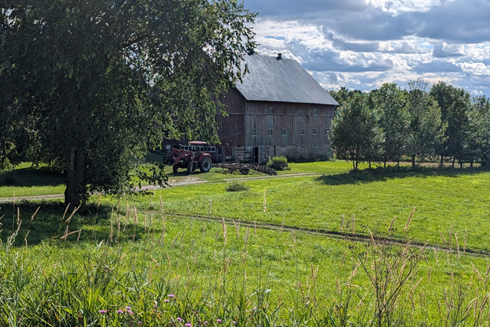
We look forward to seeing you all again.
Mid-July @ Fever Pitch

This week is going to be intense due to an accumulation of pressing tasks on the farm:
major plantings of fall vegetables (yes, already!), massive weeding of several crops including carrots — the market gardener’s nemesis — all this without forgetting that we also need to continue harvesting everything that is ripe. Since we started farming, every mid-July feels the same — intense and frightening at once — a time when we always find ourselves wondering how we will manage to get through it. But we always do! The good news is that no heatwave is forecasted, and there will be some rain here and there, which will save us an irrigation session or two.

In the baskets, a first taste of real summer vegetables,
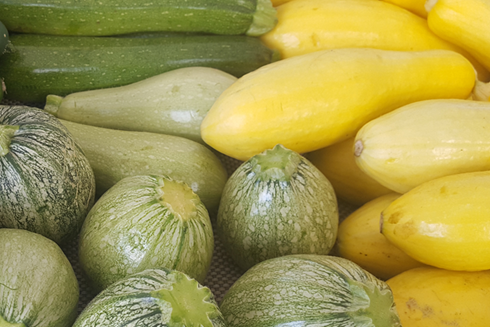
especially zucchini, which have finally decided to show up after suffering through the cold of May. The same goes for our cucumbers, which have also finally started producing fruit. To those we will be adding Swiss chard, various lettuces, beans, garlic scapes, Chinese cabbage, and one or two other yet-to-be determined vegetables.

With that, I bid you farewell and look forward to seeing you this weekend.
Farm work, noble work
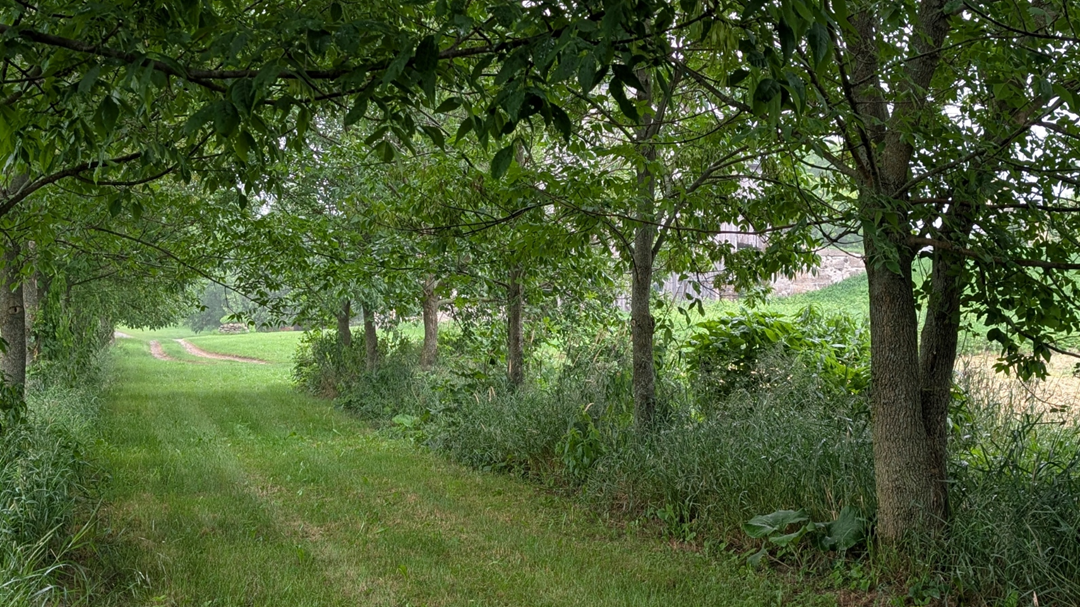
Wednesday, at dawn, we will go to Dorval to pick up the sixth member of our field team.
We’ve been waiting for this gentleman for two months, as some await their messiah. Administrative troubles delayed his arrival at the farm, but the bureaucracy has finally outdone itself, and we will have the pleasure of welcoming him with open arms—and a generous checkbook. The tone is lighthearted, but I raise a major issue that most farms in Canada are struggling with: who still wants to work in our fields nowadays…and will the country one day be able to find within itself the human resources needed for our businesses to function properly?

The work is hard, exhausting, the days are long, and the pay is just barely fair.
I am not intent on launching a debate on agricultural policy—now is not the time—I am simply adding a small piece of information to the long list of grievances…
That said, the work is noble, the joy of seeing vegetables grow remains undiminished, the closeness to nature is invigorating, and our current field crew is amazingly effective.

Despite all that, there will be no miracle in the fields for the cucurbits:
the zucchinis and cucumbers are behind schedule, the melons are just starting to recover, and the nightshades are finally in full bloom. Thankfully, the leafy greens and brassicas have taken full advantage of the cool weather, special-ordered just for them.
Meanwhile, in this week’s baskets:
kale, lettuces, garlic scapes, a variety of herbs, fennel, green cabbage or Chinese cabbage, green onions, and more.
PS: see the Recipes section of our website where we offer a few general references, in addition to the links to the week’s vegetables above.

We look forward to seeing you all again.
Taking Off Like Crazy
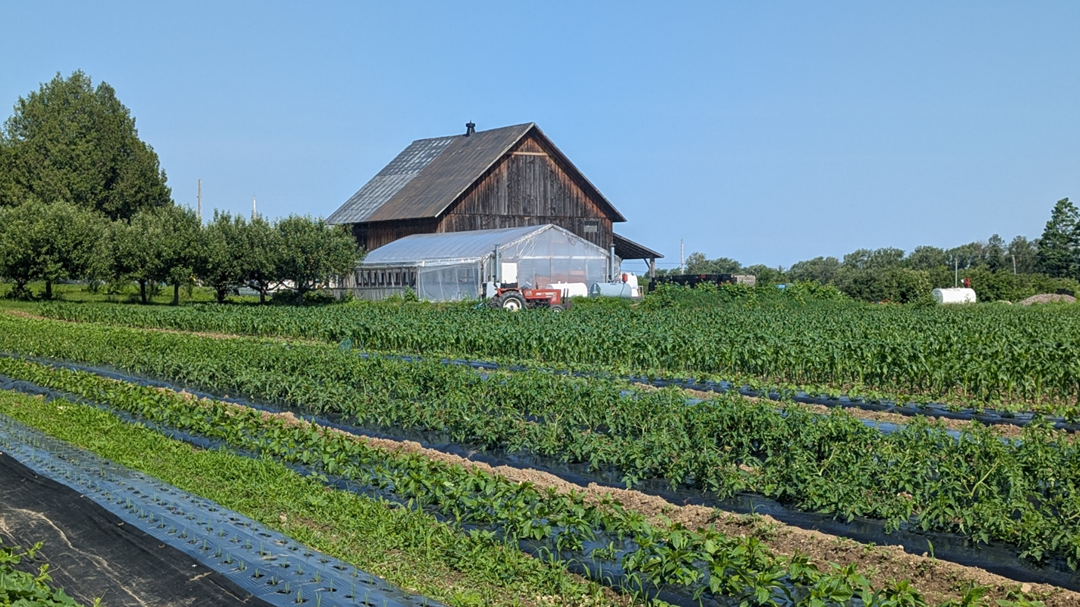
Things are taking off like crazy in the fields.
There is nothing like above-normal temperatures to spark this kind of frenzy. Add to that substantial rainfall, and suddenly it’s a race to see what outgrows what.

While an excess of growth is heartwarming for this market gardener,
it might come at a high price because the weeds have joined the party too, and hard decisions will have to be made: Do I stake the tomatoes first or pull the galinsoga from the carrots? Do I deal with the Colorado potato beetle in the eggplants or weed the herb patch?
Everything demands our immediate attention,
but the farmer will have to triage, like the front-line nurse in a provincial emergency room… No matter — everything should get done in due course, and eventually all of our vegetables will be treated with the care and respect they deserve.


We seize this opportunity
to let you know that the market season
will begin on Friday, July 4,
and we want to welcome subscribers to the Atwater and Jean Talon markets, prepaid baskets and loyalty cards both. The pressure at the farm has gone up a notch because, in just two to three days, we have to set up our tents and stalls so we are ready to welcome subscribers and customers this weekend.
In the meantime, there are many vegetables to be harvested, and I expect your baskets will include the following:
fennel, lettuces, kale or Swiss chard, assorted herbs, garlic scapes, escarole or chicory, cabbage or Napa cabbage, snow peas, and more.
PS: see the Recipes section of our website where we offer a few general references, in addition to the links to the week’s vegetables above.


Looking forward to seeing you all again.
Of Heatwaves, Virgil & Vegetables
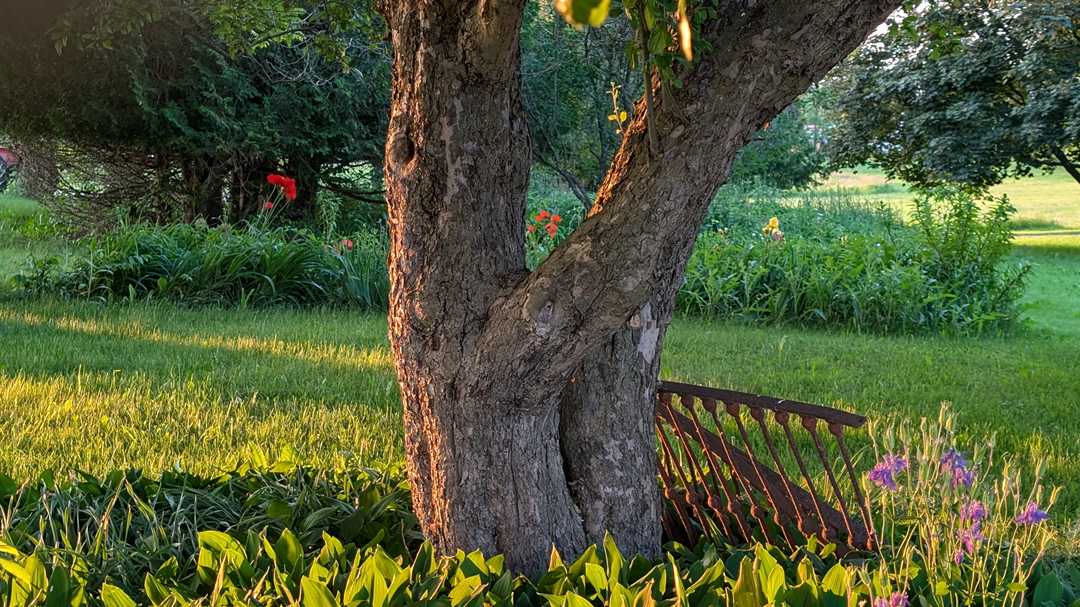
As I write these lines, we are experiencing the first heatwave of the season.
I will refrain from being unduly alarmist; we will likely see two or three of them over the course of the summer, and typically—if the past is any indication of the future—they should not last long.
I will not do a tour of the fields with you this time. Instead, I would rather evoke Virgil, that poet of Antiquity who, in his Georgics (Pastoral Evasion amid Civil War (sic!)), was probably the first to address the major issues of agriculture and modern ecology.
He did so while Rome was facing one of the worst political crises of the last century BC, composing his collection of lyrical and didactic poems as a call to return to the land, to value agricultural labour, to foster greater harmony with the animal world, and to seek a true symbiosis between humans and nature.

Virgil, herald of the modern world
and the Middle Ages!
It was he, after all, whom Dante chose as the protagonist who would explore the underworld of our existence. If I am moved by what he says, it is not so much for the accuracy of his agricultural observations—which were very much a function of the scientific knowledge of his time—but more given his visionary appeal to his fellow citizens. Reading him today is almost a political act…
Your third weekly basket is still fairly leafy but is becoming more varied:
assorted lettuces, assorted kales, garlic scapes, pak choi, turnips or beets, snow peas, strawberries, and more.
PS: see the Recipes section of our website where we offer a few general references, in addition to the links to the week’s vegetables above.


Meanwhile, happy St-Jean and we look forward to seeing you all.
Dry Spell
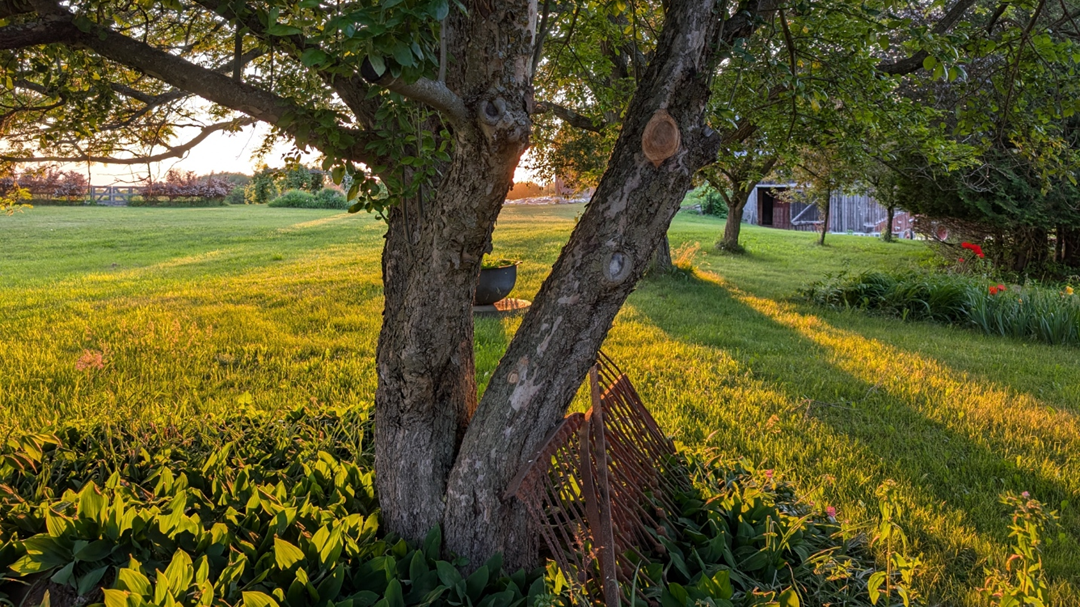
We had been eagerly awaiting this week, and it exceeded all expectations.
Dry as a stray blade of hay adrift in a Manitoba heatwave, it allowed us to make up for lost time, moving and reinstalling the caterpillar tunnels which shelter our nightshade vegetables, planting our winter squash and many other vegetables, weeding the first carrots and onions…I will spare you the myriad details that mark the zany days of market gardeners.

I am not saying everything is under control, but we are getting there.
Everything plays out between June and July, the two pivotal months for any market garden, because everything has to go into the fields — quickly and well — under the watchful eye of the weeds, which wait for the slightest moment of inattention from us to reclaim their territory. We have lost many battles to them, but that will be a story for another time…

This week’s basket will be similar to the last,
i.e. quite leafy, while we wait for the zucchinis, cucumbers, and other more consistent vegetables to ripen. Be sure to clear out your fridges, because the kale and Swiss chard leaves will be extra-large this week…There will also be pak choi, kohlrabi, beets, and depending on the delivery point, either radishes or turnips, and more. We had hoped to offer garlic scapes, but they are not quite ready, and the strawberries from Diversibio will also have to wait — the strawberry season is disappointing, according to my friend Mathieu.
In any event, see the Recipes section of our website where we offer a few general references, in addition to the links to the week’s vegetables above.

Post Scriptum
Speaking of fridges, to store all these beautiful
vegetables under optimal conditions,
please read our storage suggestions in a blog post from

Rollercoaster
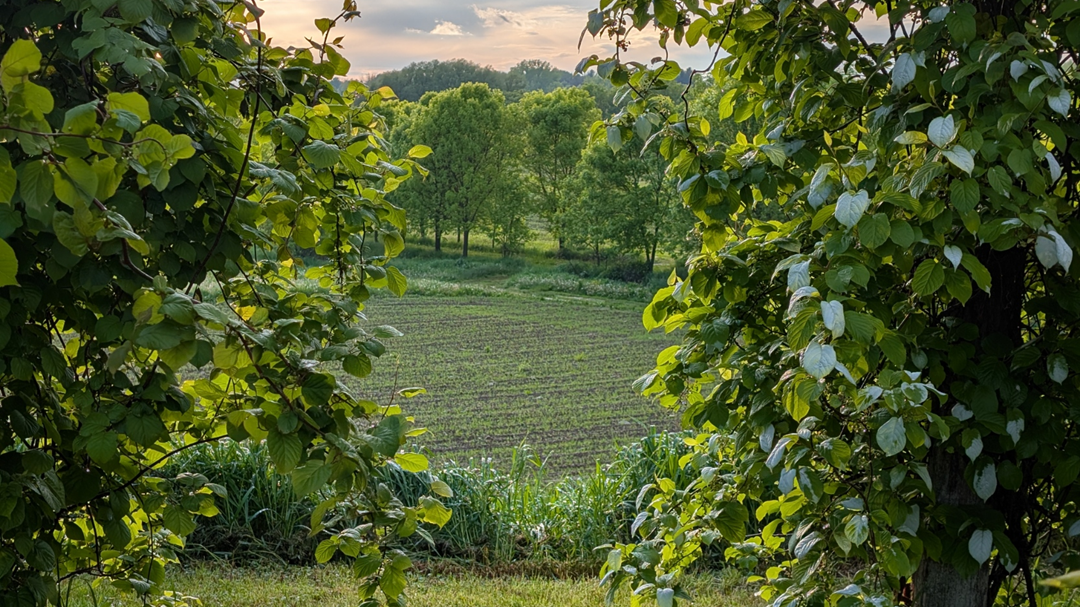
We had almost lost hope, as May had been so cool and rainy.
Would we be able to get into the fields, plant in time; would the sun shine; would the air warm up? These were the questions we kept asking ourselves over the weeks, wondering what the first baskets of the season would look like.

But nature has a way of balancing things out, so we continued firm in our belief that better conditions would prevail, allowing the vegetables to make up for lost time.
That said, we did suffer some cucurbit losses due to cold soil and excessive rain, so it is quite possible that cucumbers and zucchinis will arrive a week or two late. That will not be the case for our leafy greens, however, who have revelled in the chilly weather (a gift from the gods insofar as they are concerned); indeed, they will be well represented in your first basket.
Even though Environment Canada
– my weather forecast gospel –
is predicting a rollercoaster summer, wavering between total wetness and spectacular warm spells, we will all be praying for the return of some climate common sense…Meanwhile, we’re looking forward to seeing you again at our various neighbourhood drop-off locations between 4 and 7 pm on Wednesday, June 11 and Thursday, June 12.


In your baskets:
(see the Recipes section of our website where we offer a few general references, as well as links to specific fruits/vegetables below)
lettuce, radishes, kohlrabi, arugula, Asian greens, turnips, spinach, cilantro, and more. Do not forget to bring your bags to transfer your vegetables. And for those of you who signed up for Capitaine Levain’s organic breads (and other treats), we’ll also start bringing them to you this week.

See you very soon.
May, At Last
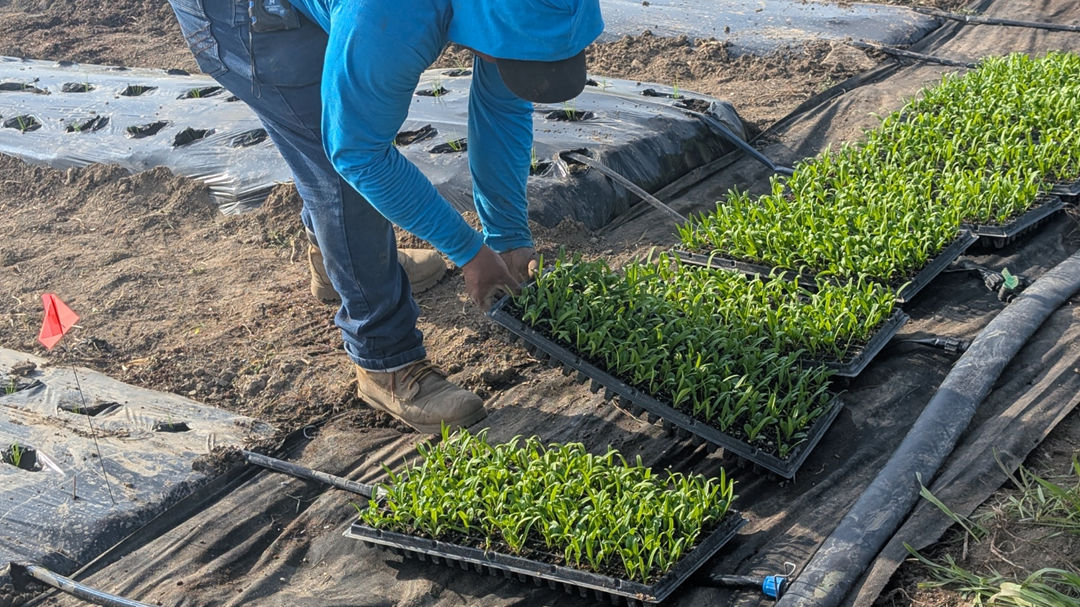
We were starting to worry.
Early May already, and nary a break in the weather: rain, gray skies, and more rain. We were heading into the kind of spring that farmers dread – wet, muddy, troublesome. But the gods had other plans, blessing us here and there with brief respites – two or three days of dry weather, just enough to superficially dry the fields and allow our tractors to work soil that would otherwise have held us back.

As I write these lines,
the plots designated for our early crops have already been harrowed, fertilized, seeded, or transplanted.
It is still touch and go, as the forecast continues to call for unstable weather – scattered showers here and gloomy skies there. Be that as it may, we’re now expecting our first ‘heat wave’, just in time to get everything back on track!
Basket and loyalty card sign-ups are rolling in, we expect to reach our goal for the season.
There are still a few spots left, though, so we invite you to register as soon as possible if you have not done so already (and to encourage family, friends, and colleagues to do the same), because time is flying and in just four weeks we will be serving up our first organic baskets – filled with hearty leafy greens and the first strawberries of the season, courtesy of our friends at DiversiBio (we grow our own blueberries but do not produce strawberries).


With that, we wish you a happy start to spring and look forward to seeing you again very soon.